
There’s a moment that happens quietly in homes long before anyone notices there’s a problem.
A chair becomes a shelf.
The dining room table becomes storage.
The garage stops functioning as a garage.
A spare bedroom becomes “the room we don’t go into anymore.”
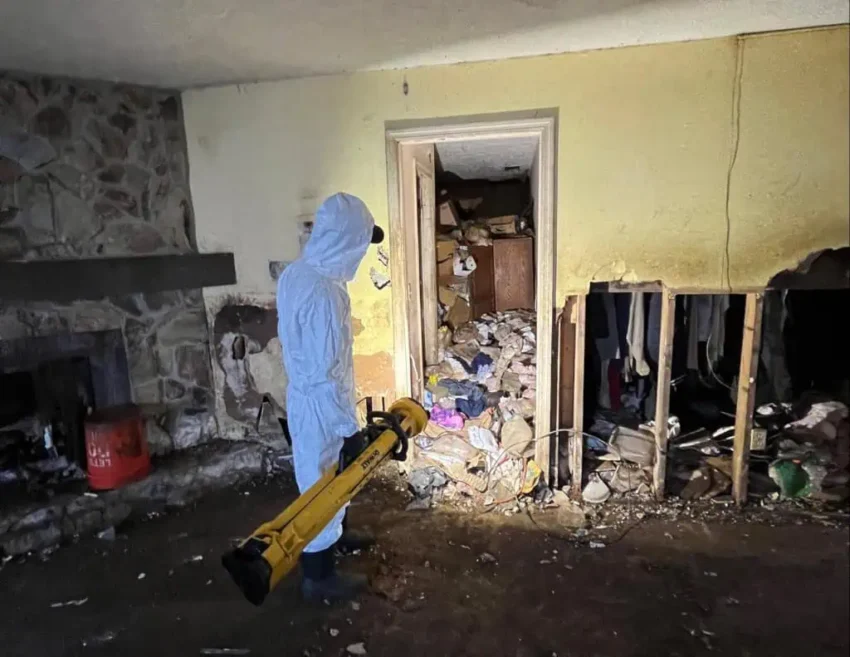
And slowly, almost invisibly, life begins shrinking around the clutter.
What most people misunderstand about hoarding — and even ordinary household disarray — is that it rarely begins with laziness, incompetence, or messiness. Homes don’t collapse into chaos overnight. They erode through emotional exhaustion, deferred decisions, unresolved grief, overconsumption, burnout, and the modern illusion that more possessions somehow create more security.
The pile is almost never just a pile.
It is postponed energy.
The Modern Home Was Never Designed for Modern Consumption
For most of human history, people owned relatively few things. A household might accumulate objects over generations, but acquisition was slow, expensive, and deliberate.
Today, objects enter our homes frictionlessly.
One-click ordering. Subscription boxes. Fast furniture. Cheap décor. Endless “organizing solutions” that often become more clutter themselves. We consume aspirational identities faster than we can process them.
The average home is now less a living space and more a warehouse for unresolved intentions:
- Clothes for the person we want to become
- Hobby supplies for projects we never started
- Paperwork we’re afraid to confront
- Sentimental items we feel guilty discarding
- Broken objects waiting for repair
- Duplicates bought because we forgot we already owned one
Eventually, the house stops serving the people inside it.
The people begin serving the house.
Clutter Is Often a Decision-Making Crisis
One of the least discussed truths about disheveled homes is that clutter compounds cognitively.
Every object becomes a tiny unresolved question:
- Keep or toss?
- Donate or sell?
- Where should this go?
- What if I need it later?
- Why did I spend money on this?
- Why can’t I get my life together?
That last question is the most dangerous.
Because once clutter becomes moralized, shame enters the room.
And shame is profoundly immobilizing.
People who live in increasingly chaotic environments often know exactly how bad it has gotten. They may even fantasize constantly about fixing it. But overwhelm creates paralysis. The larger the pile grows, the more psychologically impossible it feels to begin.
This is why many homes deteriorate not in dramatic bursts — but through tiny daily abandonments.
A bag left on the floor.
Mail unopened for weeks.
Laundry unfolded.
Boxes “temporarily” stacked in the hallway.
Entropy wins through accumulation.
The House Often Reflects the Nervous System
Walk through enough cluttered homes and a pattern emerges: the environment frequently mirrors the emotional state of the person living there.
Depression creates stagnation.
Anxiety creates avoidance.
Trauma creates attachment. (https://ascendrecoveryfl.com/)
Burnout eliminates maintenance capacity.
Many people are not disorganized because they lack discipline.
They are disorganized because their mental bandwidth has been fully consumed elsewhere.
A parent caring for children while working full-time.
An adult child caring for aging parents.
Someone grieving a death.
Someone quietly struggling with addiction or depression.
Someone whose life has become a series of emergencies.
The mess becomes visual evidence of invisible overload.
And ironically, the worsening environment then feeds the stress itself. Studies consistently show clutter increases cortisol, reduces focus, worsens sleep, and contributes to feelings of helplessness.
The home stops feeling restorative.
It begins feeling accusatory.
Why Traditional “Decluttering Advice” Often Fails
Most advice about clutter is tactical:
- Buy bins
- Use labels
- Fold clothes differently
- Follow a 30-day challenge
- Watch a minimalist documentary
But systems fail when the emotional architecture underneath remains untouched.
You cannot organize your way out of unresolved avoidance.
In fact, many people with heavily cluttered homes become hyper-organized within the chaos. They know exactly where everything is. The issue is not intelligence. It’s emotional processing and accumulated inertia.
Real change usually begins with a psychological shift:
The goal is not perfection.
The goal is reclaiming function.
That distinction matters enormously.
Because perfectionism is often what created the paralysis in the first place.
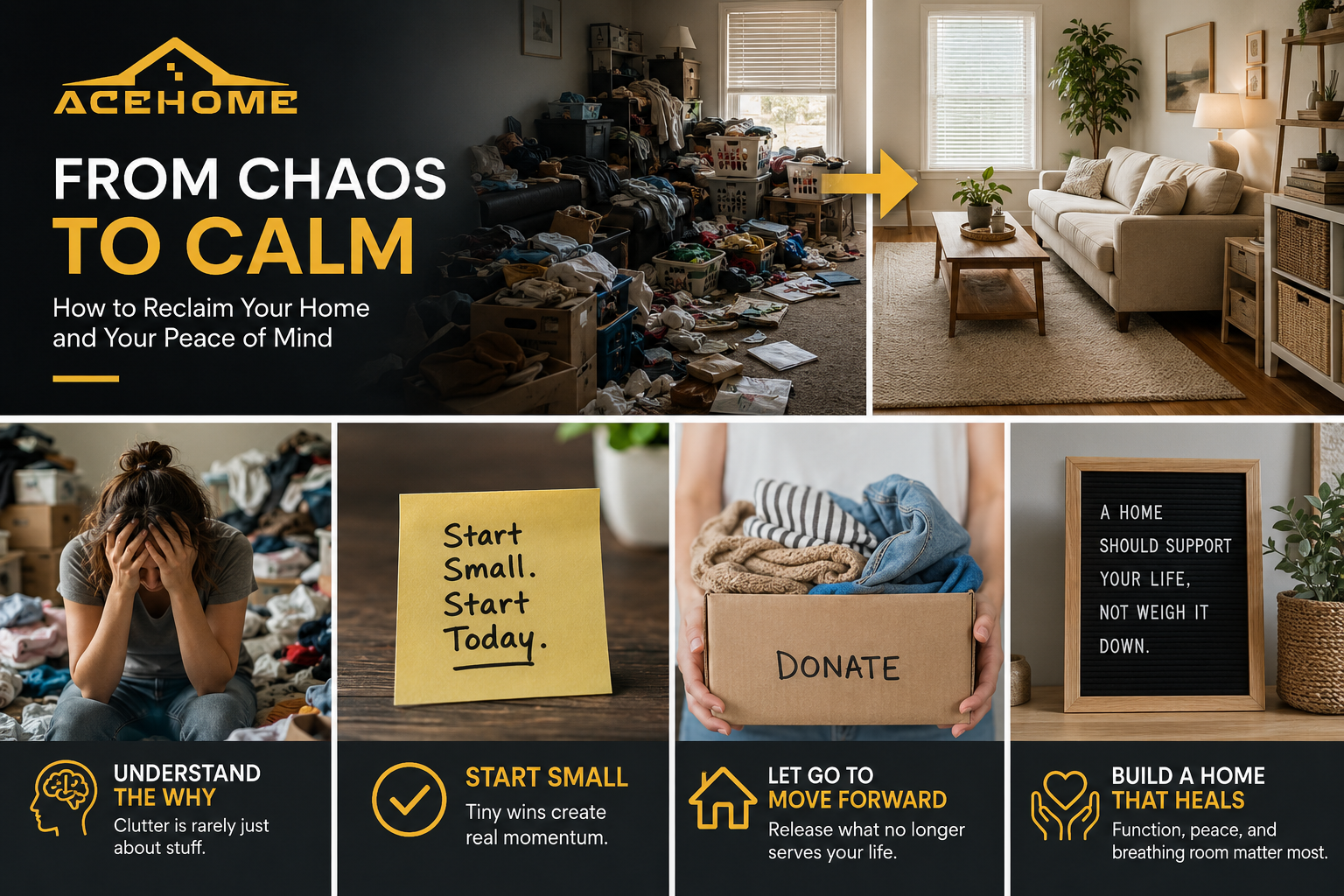
The First Real Step Is Smaller Than People Think
People imagine transformation as a weekend purge or dramatic before-and-after reveal.
In reality, sustainable recovery from household chaos usually starts embarrassingly small.
Not the whole garage.
One surface.
Not the entire bedroom.
One nightstand.
Not “getting organized.”
Restoring one functional space.
Why? Because momentum matters more than intensity.
When people attempt total-home overhauls, they exhaust themselves emotionally and physically. Within days, the house regresses, which reinforces hopelessness.
But small visible wins change the emotional atmosphere of the home.
A cleared sink changes behavior.
A usable couch changes behavior.
A clean entryway changes behavior.
Function creates psychological relief.
Relief creates motivation.
Motivation creates consistency.
Homes Heal Gradually
A disheveled house rarely becomes healthy through punishment or humiliation. Public shame, family criticism, and self-hatred almost always worsen the cycle.
Homes improve when people reconnect with agency.
That means:
- Reducing incoming clutter before attacking existing clutter
- Accepting that some possessions represent emotional grief
- Creating systems simple enough to survive stressful weeks
- Letting go of fantasy versions of ourselves
- Separating self-worth from cleanliness
- Asking for help before overwhelm becomes collapse
Most importantly, it means understanding this:
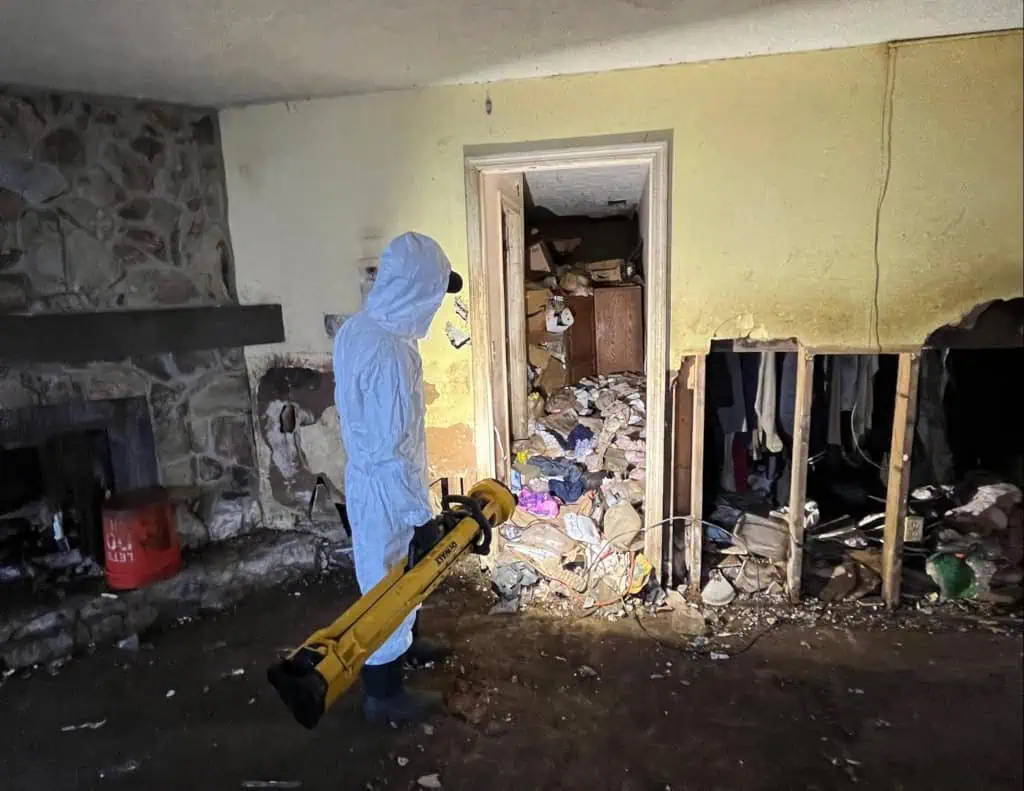
IMG Credit (https://floridaemergencycleaning.com/hoarding-cleanup/)
A home is not supposed to be a museum of postponed decisions.
It is supposed to support a life.
And when a space no longer supports living — when it creates anxiety, isolation, avoidance, or shame — the solution is not aesthetic perfection.
The solution is restoring dignity, function, and breathing room.
Sometimes the most radical act is not throwing everything away.
It is deciding that your environment should feel like it belongs to a human being again.